

 Ulaan Baatar
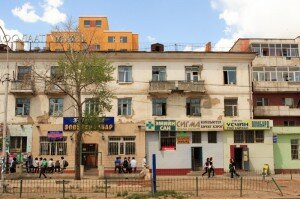
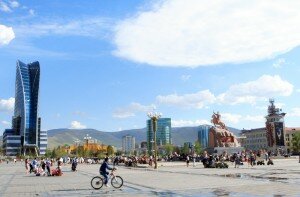
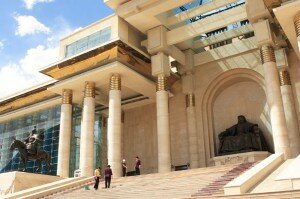
Ulaan Baatar is the capital of Mongolia. With a population of just over one million, it is the country’s largest city. Located in northern central Mongolia, Ulaan Baatar was once a nomadic city, having moved to twenty-eight different locations (each chosen ceremonially), before permanently settling in its present location in 1778. The city is situated on the banks of the Tuul river and surrounded by four sacred mountains.
The city has had several names in the past and was named Ulaan Baatar when it became the capital of the new Mongolian People’s Republic in 1924. The name ‘Ulan Baatar’ translates as ‘red hero’ and the city was name in honour of Mongolia’s national hero, Damdin Sukhbaatar. During the twentieth century, Ulaan Baatar grew into a major manufacturing centre and today prides itself as the country’s cultural, industrial and financial centre. It is also an important transportation hub and is connected to the Trans-Siberian Railway and the Chinese railway networks.
Over recent years, the population of Ulaan Baatar has rapidly expanded due to significant rural-urban migration. This shift in people influenced the transition from the city’s centralised to a more decentralised system of urban governance. To address this issue, the Mongolian Association of Urban Centres (MAUC) was established in 2003 by the local government of Ulaan Baatar with the purpose of collaborating with provincial authorities through exchanging local knowledge in regard to decentralisation and regional development.
Innovating Project Innovating City
Urban Development
This project seeks to support the exchange of urban planning experiences and good governance by creating highly developed decentralisation systems from national to local authorities.